
Princeton, New Jersey, USA
Technical Info +
The reconstruction of the Princeton University Art Museum is conceived as a campus within the campus, a space of genuine inquiry where the exhibition of diverse practices, learning as a synthesis of knowledge and cross-cultural connections weave together into a singular experience that encompasses a multiplicity of ideas and peoples.
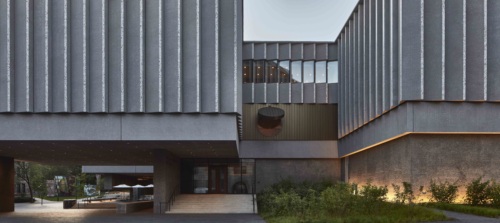
The new building now stands on the site of the former Museum, at the heart of Princeton’s storied campus, placing its globe-spanning collections in the daily path of the University community and serving as a welcoming gateway for visitors from around the world. The design integrates dynamically into campus life, with key pedestrian pathways flowing into and through the Museum via two “art walks”—thoroughfares that function as the building’s circulatory spine. Seven “pavilions” scale the building to harmonize with the historic structures nearby and provide a range of varied gallery experiences. The project also created a new home for the University’s Department of Art & Archaeology while retaining Marquand Library; together, these three units now function as a vibrant center for research and teaching.
The completed building allows the Museum’s globe-spanning collections to be exhibited largely on a single level, shaping new ways of encountering the collections, emphasizing ideas of cultural contact and exchange, and fostering new modes of storytelling. By challenging the traditional hierarchies inherent in multilevel gallery display, the Museum invites moments of discovery and surprise as visitors encounter ideas and objects in narratives that transcend geography and chronology. This approach unites architecture and curatorial practice in a way that remains rare among major cultural institutions.